
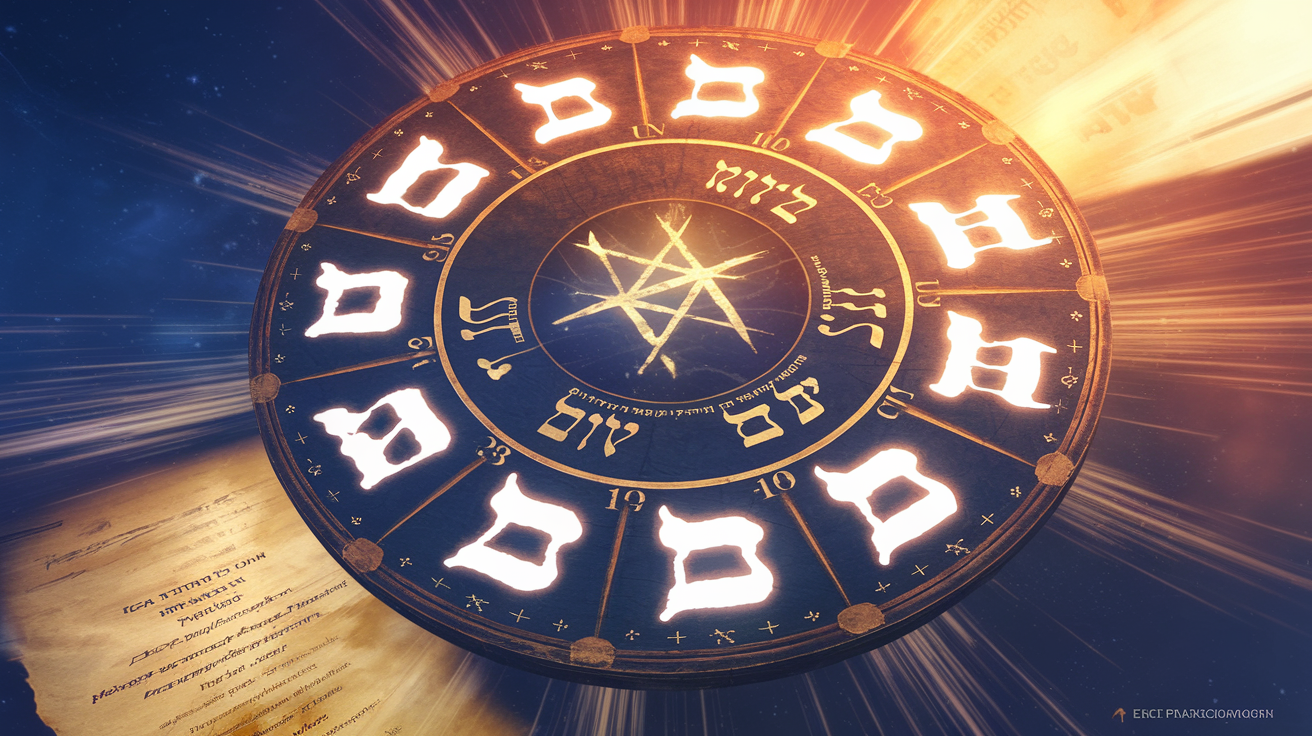
How to Journal Through the Hebrew Months All Year
Use the prophetic meaning of each Hebrew month as a journaling framework — with practical Rosh Chodesh prompts for every season.
Most journaling resets happen on January 1 and fade by February. The Hebrew calendar offers something different: a divinely structured year where each month carries its own prophetic theme, tribe, sense, and invitation from God. Learning how to journal through the Hebrew months gives your practice a framework that is not arbitrary — it is covenantal.
Why the Hebrew Calendar Is a Journaling Framework, Not Just a Religious Calendar
God built meaning into time itself. Each Hebrew month carries a distinct prophetic theme, a tribe of Israel, a Hebrew letter, and a dominant sense — sight, hearing, speech, action. Psalm 104:19 says He appointed the moon for seasons. That word appointed is intentional. The calendar was not an afterthought.
The Gregorian calendar is administrative. It tracks business quarters and tax years. The Hebrew calendar is covenantal — it tracks where God is moving, what He is emphasizing, and what He is inviting His people into at each turn of the moon. That distinction matters for how you journal.
Many believers already journal through the biblical feast days — Passover, Pentecost, Tabernacles — and find those seasons rich with prophetic encounter. Monthly Rosh Chodesh journaling is the natural daily companion to that practice. It keeps you engaged with the sacred rhythm of the year between the major feasts, not just during them.
This framework works whether you have studied the Hebrew calendar for a decade or are opening it for the first time. You do not need to be a scholar. You need a journal, a listening posture, and the month you are in.
What Rosh Chodesh Is and Why It Is the Right Time to Journal
Rosh Chodesh means "head of the month" — the new moon, the first day of each Hebrew month. In Numbers 10:10, the new moon was marked with trumpets, offerings, and intentional remembrance before God. It was set apart, not incidental.
In 2 Kings 4:23, the Shunammite woman is asked why she is going to the prophet — "it is neither new moon nor Sabbath." The question reveals something: Rosh Chodesh was a recognized day of prophetic inquiry. People sought God and His word at the turn of each month. That instinct is worth recovering.
The new moon is a natural reset point. The sky itself marks the moment, which makes it a powerful anchor for your journaling rhythm. Think of it as a monthly appointment with God — not a religious obligation, but a rhythmic invitation to ask: Lord, what are You saying this month?
The Prophetic Meaning of Each Hebrew Month at a Glance
Each month below includes its prophetic theme and, where relevant, its tribal and seasonal associations. Note that Hebrew months shift annually against the Gregorian calendar — check current year dates each season.
Tishrei (Sept/Oct): New beginnings, repentance, and kingship. The month of Rosh Hashanah, Yom Kippur, and Sukkot. Tribe of Ephraim. The fullest month of the year prophetically — God establishes new things here.
Cheshvan (Oct/Nov): The hidden month — no feasts, no holy days. A month of inner work, quiet faithfulness, and trusting what was sown in Tishrei. What God plants in Cheshvan often surfaces months later.
Kislev (Nov/Dec): Dreams, visions, and light in darkness. Tribe of Benjamin. Associated with Hanukkah — the miracle of light when it should have gone out. A month to pay attention to what God speaks in the night.
Tevet (Dec/Jan): A month of refinement and honest evaluation. Seeing clearly — removing what does not belong. Historically a month of difficulty that produced clarity.
Shevat (Jan/Feb): The new year of trees (Tu B'Shevat). Roots going deep, fruitfulness beginning underground. Tribe of Asher. A month to tend what is not yet visible but is growing.
Adar (Feb/Mar): Joy, reversal, and Purim. Tribe of Naphtali. The month where the enemy's plans are overturned — what was meant for destruction becomes a testimony. Laughter before the Lord is appropriate here.
Nisan (Mar/Apr): The first month of the religious year. Tribe of Judah. Passover, redemption, and the month of miracles. God has historically moved in dramatic deliverance during Nisan — expect acceleration.
Iyar (Apr/May): Healing and transition. The wilderness between Egypt and Sinai. God revealed Himself as YHWH Rapha — the Lord who heals — in Exodus 15:26, which falls in this season. A month to bring wounds before the Healer.
Sivan (May/Jun): Revelation and the Word. Tribe of Zebulun. Shavuot (Pentecost) falls here — the giving of Torah at Sinai and the outpouring of the Spirit in Acts 2. A month to receive from heaven and write down what comes.
Tammuz (Jun/Jul): The dominant sense is sight. A month of spiritual vigilance — guarding what enters through the eyes and shapes the imagination. Historically a month of vulnerability; a month to fix your gaze deliberately.
Av (Jul/Aug): A month that holds both deep mourning (the destruction of the Temple, the 9th of Av) and great joy (the 15th of Av). God specializes in turning grief into glory here. Psalm 30:11 is the verse of this month.
Elul (Aug/Sept): The month of return and preparation. The rabbis say "the King is in the field" — God draws near before the High Holy Days. Song of Solomon 6:3, "I am my beloved's and my beloved is mine," is the Elul verse. A month of intimacy and honest reckoning before Tishrei begins again.
How to Structure a Rosh Chodesh Journaling Session
Keep this session under 30 minutes. It is a monthly anchor, not an exhaustive study. If you are new to hearing God in writing, review the basics of two-way journaling with God before your first session.
Enter with thanksgiving. Begin by writing what God did in the previous month. Psalm 100:4 says to enter His gates with thanksgiving — gratitude opens prophetic perception. Do not skip this step.
Study the month's prophetic theme. Spend a few minutes reading about the new month's meaning before you write. Let it prime your spirit rather than beginning cold.
Ask the opening question. Write: Lord, what do You want to say to me this month in light of this season? Then write the first thing that comes without editing it.
Write to the specific attributes of the month. Use the tribe, Hebrew letter, dominant sense, and theme as four distinct journaling angles. One prompt per attribute is enough.
Receive a Scripture anchor. Ask God for one verse to carry through the month. Write it out in full and note why it resonates with what you are walking through.
Set a prophetic expectation. Write one to three things you are believing God for specifically this month, tied to the monthly theme. These become the review material for next Rosh Chodesh.
Practical Prophetic Journal Prompts for Every Hebrew Month
These prompts are designed for Rosh Chodesh but can be revisited mid-month when you need to re-engage the theme. For months like Kislev or Sivan that carry strong dream and vision themes, see also the resources on journaling prophetic dreams and visions and how to journal visions from God.
Tishrei: What am I releasing from last year? Where is God establishing His kingship in a new area of my life?
Cheshvan: What is God developing in me during this quiet season? What am I tempted to rush that needs more time?
Kislev: What dreams or visions has God given me recently? How is He bringing light into a dark or uncertain area?
Tevet: What have I been tolerating that does not belong in my life? What does God want me to see more clearly?
Shevat: What fruit is God producing in me? What roots need to go deeper — in His Word, in community, in prayer?
Adar: Where does God want to bring joy and reversal? What has the enemy meant for harm that He is turning around?
Nisan: What is God redeeming right now? What old thing is passing and what new thing is beginning?
Iyar: Where do I need God as my Healer this month? What is He healing that I have not fully acknowledged?
Sivan: What is God revealing from His Word that I have not seen before? What truth is He asking me to receive and carry?
Tammuz: What am I allowing myself to see that is shaping my imagination in the wrong direction? What does God want me to fix my gaze on instead?
Av: What grief or loss is God asking me to bring before Him? What is He turning from mourning to dancing (Psalm 30:11)?
Elul: How have I drifted from intimacy with God this year? What does returning fully look like for me before Tishrei begins?
Each prompt is short by design. The goal is to open the conversation, not script it. Write the first thing that comes and keep moving.
How to Track Themes Across the Year Without Losing Your Entries
The power of this framework multiplies when you can look back across twelve months and see patterns in what God said. One month's entry is a snapshot. Twelve months of entries is a documented record of God's faithfulness — and one of the most faith-strengthening documents you will ever own.
The most common obstacle is not discipline; it is retrieval. Journal entries scatter across notebooks, notes apps, and voice memos with no system to surface patterns. Building a prophetic log system from the start solves this before it becomes a problem. Pair that with a habit of praying prophetic words into fulfillment and your monthly entries stop being passive records and become active prayer material.
At each Rosh Chodesh session, take two minutes to review the prophetic expectation entry from the previous month before writing anything new. You will be surprised how often God has already moved on what you wrote. Habakkuk 2:2 — "Write the vision and make it plain" — is not only about individual prophecies. It is a call to systematic recording so that what God says does not disappear into the noise of ordinary life.
Using God365 to Journal Through the Hebrew Months
God365 was built with this kind of layered, searchable record in mind. The app surfaces the current Hebrew month, date, and upcoming biblical calendar dates automatically — you do not have to track it manually or remember to look it up each month.
The Hebrew calendar integration and entry categories map directly to how prophetic journaling actually works. The 10 categories — including Dreams, Visions, Prophetic Words, Quiet Time, and Journal — correspond naturally to the kinds of entries this framework produces each month. A Kislev dream entry, a Sivan revelation from Scripture, an Av lament that turned to praise — each goes in its right place and stays findable.
You can create a dedicated Rosh Chodesh entry at the start of each month, tagged to the Hebrew month, and return to it in seconds when next month arrives. That single feature changes how you review the year. God365 is currently available on iOS — download God365 and start with the month you are in. Android is coming soon.
Starting Small: Your First Rosh Chodesh Journal Entry
You do not need to know all twelve months before you begin. Start with the current month. Look up where you are on the Hebrew calendar, read two or three sentences about that month's prophetic theme, and sit with God for 20 minutes using the prompts above.
Write whatever comes. Even a single sentence per prompt is enough to begin the habit. The discipline of showing up at Rosh Chodesh each month matters more in year one than the depth of any single entry — the practice compounds.
By Elul, you will have eleven months of documented conversation with God. That record will preach to you. If you are already tracking answered prayers across the year in another format, this practice runs in parallel and gives those answered prayers a prophetic calendar context that deepens both.
The Hebrew year is already moving. The question is whether you are moving with it intentionally, pen in hand.
God365 is a free prophetic journaling app built for Spirit-filled believers who want to track what God speaks across every season. Features include Hebrew calendar integration, 10 entry categories, AI-powered insights, and more. Currently available on iOS — download God365. Android coming soon.